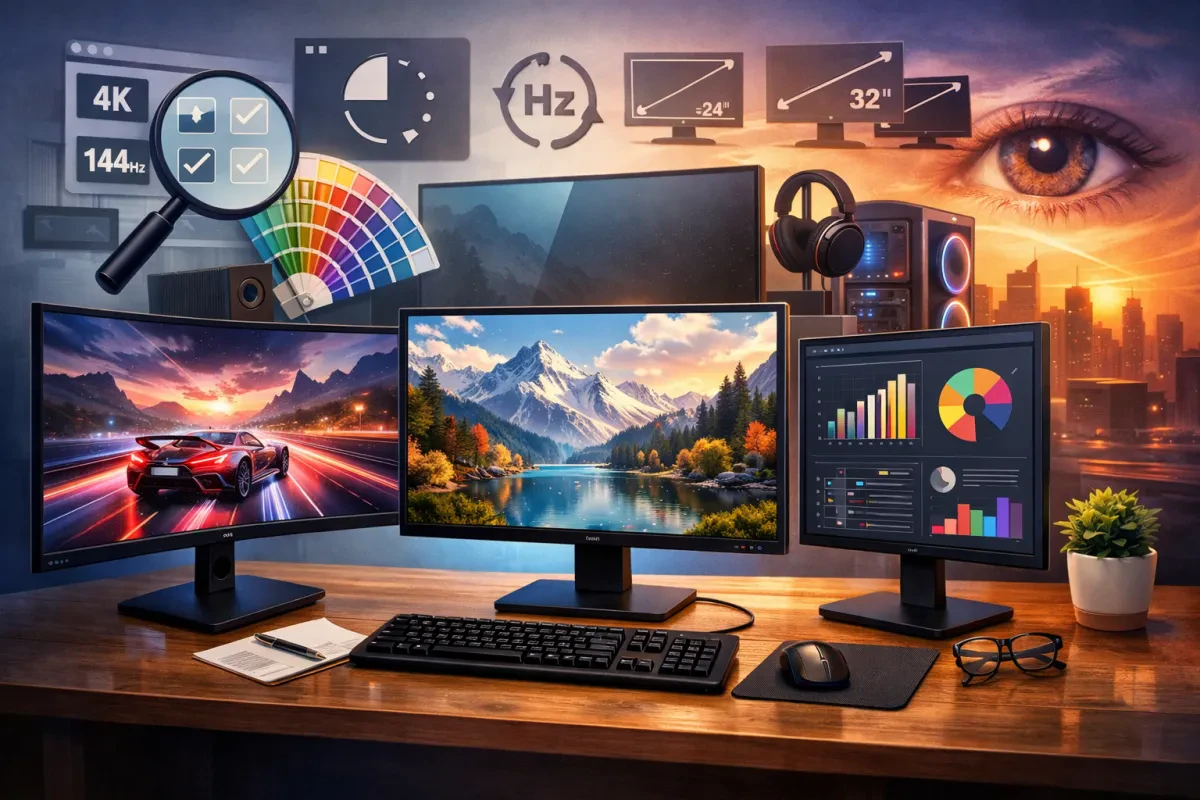
In addition to screen size, resolution is another important factor to consider when selecting a PC monitor. Resolution refers to the number of pixels that the monitor can display, typically represented by the number of horizontal pixels by the number of vertical pixels. The higher the resolution, the sharper and clearer the images will appear on the screen. For everyday tasks like web browsing and document editing, a standard resolution of 1920x1080 (also known as 1080p) should suffice. However, if you plan on working with high-resolution images or videos, you may want to consider a monitor with a higher resolution, such as 2560x1440 (1440p) or 3840x2160 (4K).
It's important to note that the screen size and resolution of a monitor are closely related. A larger screen size with a lower resolution may result in pixelation and a lack of clarity in images, while a smaller screen size with a higher resolution may make text and icons appear too small. Ultimately, the ideal screen size and resolution will depend on your personal preferences and how you plan to use the monitor. Take some time to consider your needs and preferences before making a decision, and don't hesitate to test out different monitors in person to see which one feels right for you.
Display panel technology
TN panels are known for their fast response times and refresh rates, making them ideal for gamers and those who require smooth motion handling. However, they are often criticized for their limited viewing angles and color accuracy. On the other hand, IPS panels offer superior color accuracy and wider viewing angles, making them a popular choice for professionals who require precise color reproduction. VA panels fall between TN and IPS panels in terms of performance, offering good color reproduction and contrast ratios.
OLED panels are relatively new in the monitor market but are gaining popularity for their vibrant colors, deep blacks, and high contrast ratios. They are known for their excellent picture quality and energy efficiency, making them ideal for those who prioritize image quality above all else. When choosing a PC monitor, it is essential to consider the type of display panel technology that best suits your needs and preferences. Each panel technology has its own strengths and weaknesses, so it is important to weigh them carefully before making a decision.
Refresh rate and response time
The refresh rate refers to how many times per second the monitor updates the display. A higher refresh rate, such as 144Hz or 240Hz, results in smoother motion and less motion blur. This is particularly important for gamers, as a higher refresh rate can provide a competitive edge by allowing for faster reactions and more fluid gameplay.
Response time, on the other hand, measures how quickly a pixel can change from one color to another. A lower response time, typically measured in milliseconds (ms), means that the monitor can display fast-moving images more clearly without ghosting or blurring. For gamers or anyone watching action-packed content, a low response time of 1ms to 4ms is recommended for optimal performance.
When choosing a PC monitor, it's important to strike a balance between refresh rate and response time based on your specific needs. Gamers may prioritize a high refresh rate for smoother gameplay, while graphic designers may prefer a monitor with a low response time for accurate color representation. By understanding the differences between these two factors, you can select a monitor that enhances your viewing experience and meets your requirements.
Ergonomic design and connectivity options
When it comes to selecting the perfect PC monitor, one of the key factors to consider is the ergonomic design. A monitor that is adjustable in terms of height, tilt, and swivel can help reduce strain on your neck and eyes, allowing for a more comfortable viewing experience. Look for monitors that offer these ergonomic features so that you can customize the display to suit your needs.
In addition to ergonomic design, connectivity options are also important to consider when choosing a PC monitor. Make sure the monitor has the necessary inputs to connect to your PC, whether it be HDMI, DisplayPort, or VGA. Having multiple connectivity options can make it easier to switch between devices and ensure compatibility with different setups.
Another feature to look out for when selecting a PC monitor is the presence of USB ports. Having USB ports on the monitor can make it easier to connect peripherals such as a keyboard, mouse, or external hard drive without having to reach around to the back of your PC tower. This can help keep your workspace tidy and organized while also providing convenient access to essential devices.